Agriculture sits at the foundation of nearly every economy on the planet, and its business dimensions are far more complex than most entrepreneurs realize. Whether you are entering the sector as a producer, a processor, or a technology provider, understanding how the industry operates financially, operationally, and legally separates those who thrive from those who struggle. The U.S. agricultural sector alone recorded approximately $543.6 billion in total farm production value, according to the USDA's 2022 Census of Agriculture, which counted around 1.9 million farms across the country. These numbers signal both the scale of opportunity and the level of competition. Getting the business side right from the start is not optional.
Why Agriculture Matters to Business Strategy
Agribusiness is not a single industry — it is a layered value chain that spans input supply, primary production, processing, distribution, retail, and a growing range of technology services. Each layer carries different risk profiles, capital requirements, and margin structures. A business entering at the production level faces exposure to weather, commodity prices, and land costs. One entering at the processing or distribution stage faces different pressures: supply chain reliability, food safety compliance, and margin compression from both upstream and downstream partners.
Understanding where you sit in this chain determines which financial metrics matter most. Gross farm income tells you what revenue the operation generates before any deductions. Net farm income, after operating costs, interest, depreciation, and taxes, tells you whether the business is actually viable. Many new entrants focus on revenue without modeling the cost structure underneath it. That gap creates financial fragility fast.
The sector also connects directly to macroeconomic forces. Input costs — seeds, fertilizers, fuel, labor — move with energy markets and global supply chains. Commodity prices fluctuate with international demand, currency shifts, and weather events in competing regions. A business plan that does not account for this volatility is built on assumptions that will not hold.
Technology and sustainability concerns are reshaping the competitive landscape at every level. Precision farming tools, data analytics platforms, and traceability systems are no longer reserved for large operators. Smaller farms and agribusinesses that adopt these tools earlier tend to operate with tighter cost control and stronger relationships with buyers who demand documented practices.
Choosing a Profitable Agricultural Business Model
The range of viable models within agriculture is wider than most people assume. Row crop production, livestock operations, horticulture, organic certification, aquaculture, agritourism, and agricultural services each carry distinct economics. Choosing the right model requires matching market demand, available capital, local climate, and your own operational capabilities.
Read also: How to Invest in Stocks: A New Investor's Survival Kit
Commodity crop production — corn, soybeans, wheat — offers scale but thin margins. Prices are set by global markets, not by the individual producer. Differentiated products, such as certified organic, non-GMO, or specialty crops sold through direct channels, allow for price premiums but require more marketing effort and often longer development timelines before cash flow stabilizes.
Livestock operations carry high fixed costs in facilities and feed, but they can generate steadier income streams when managed well. Vertical integration — controlling both production and processing — increases margin capture but also multiplies operational complexity and compliance obligations. Many mid-sized operators find that strategic partnerships with processors or cooperatives provide a more manageable path to market.
Service-based models within the sector — equipment leasing, agronomic consulting, crop scouting, soil testing — often require lower capital and generate faster returns than production itself. These models are gaining ground as farm operators face increasing complexity and look for specialized expertise they cannot develop in-house. For entrepreneurs with technical backgrounds, these adjacent markets offer real business opportunities without the full exposure of owning productive land.
Whatever model you select, build your projections around realistic working capital needs. Seasonal cash flow gaps are standard in agriculture. A business that cannot bridge the period between planting costs and harvest revenue will face liquidity stress regardless of how strong its annual numbers look on paper.
Managing Costs, Cash Flow, and Market Risk
Financial discipline in an agricultural business starts with a detailed operating budget built before the season begins. Separate your variable costs — seeds, chemicals, fuel, labor — from your fixed costs: land rent or mortgage payments, equipment depreciation, insurance premiums, and overhead. This distinction matters because variable costs can sometimes be adjusted mid-season while fixed costs cannot.
Working capital management deserves close attention. The USDA Economic Research Service tracks farm financial conditions regularly, and its data consistently shows that farms with strong liquidity positions weather price downturns and production losses far better than those operating with minimal reserves. Maintaining a working capital buffer equivalent to at least three to six months of operating expenses gives an operation room to absorb shocks without forced asset sales.
Read also: How to innovate within a traditional restaurant chain framework
Crop insurance is not a luxury for serious operators. The USDA Risk Management Agency administers federal crop insurance programs that cover yield losses, revenue shortfalls, or both, depending on the policy type. Enrollment deadlines are strict and vary by crop and county, so checking current dates through the RMA directly is necessary each season.
Commodity price risk can be managed through forward contracts, futures markets, and marketing pools. The Commodity Futures Trading Commission oversees futures markets where many agricultural commodities trade. Using these tools requires understanding basis risk — the difference between local cash prices and futures prices — but even basic forward contracting with a local elevator can lock in acceptable margins before harvest.
Input cost inflation remains a persistent challenge. Energy prices affect fertilizer costs, fuel, and transportation simultaneously. Operators who build supplier relationships early, lock in input prices where possible, and monitor their cost-per-unit-of-output regularly maintain better control over profitability than those who manage reactively.
Compliance, Sustainability, and Operational Resilience
Regulatory requirements in agriculture touch nearly every aspect of operations. The U.S. Food and Drug Administration enforces food safety standards under the Food Safety Modernization Act, which imposes traceability, sanitation, and recordkeeping obligations on many produce operations. The U.S. Environmental Protection Agency governs pesticide use, water quality, and emissions from agricultural facilities. State-level rules add another layer that varies significantly by jurisdiction.
Compliance is not just a legal obligation — it directly affects market access. Buyers, retailers, and food service companies increasingly require documented practices as a condition of doing business. Third-party audits, Good Agricultural Practices certification, and organic certification all demand time and investment, but they open doors to premium markets that are otherwise closed.
Soil health and water management are now business metrics, not just environmental ones. Practices supported by the USDA Natural Resources Conservation Service — cover cropping, reduced tillage, nutrient management planning — lower input costs over time and improve yield stability. Operations that invest in soil health are building a productive asset; those that deplete it are quietly eroding their own balance sheet.
Read also: Why SandP500 Should Be Central to Your Portfolio Strategy
Climate variability is a business risk that requires concrete planning. Diversifying crops, investing in irrigation infrastructure, and maintaining adequate insurance coverage are practical responses. The Cooperative Extension System, operating through land-grant universities, provides research-based guidance tailored to local conditions that can inform resilience planning at the farm level.
Building a Scalable Agriculture Growth Plan
Growth in an agricultural business rarely comes from doing one thing bigger. It comes from building systems that perform consistently, then expanding those systems with access to capital, markets, and talent. The USDA Farm Service Agency offers loan programs for beginning and established farmers, and the U.S. Small Business Administration provides resources on business planning, financing, and growth management that apply directly to farm-based enterprises.
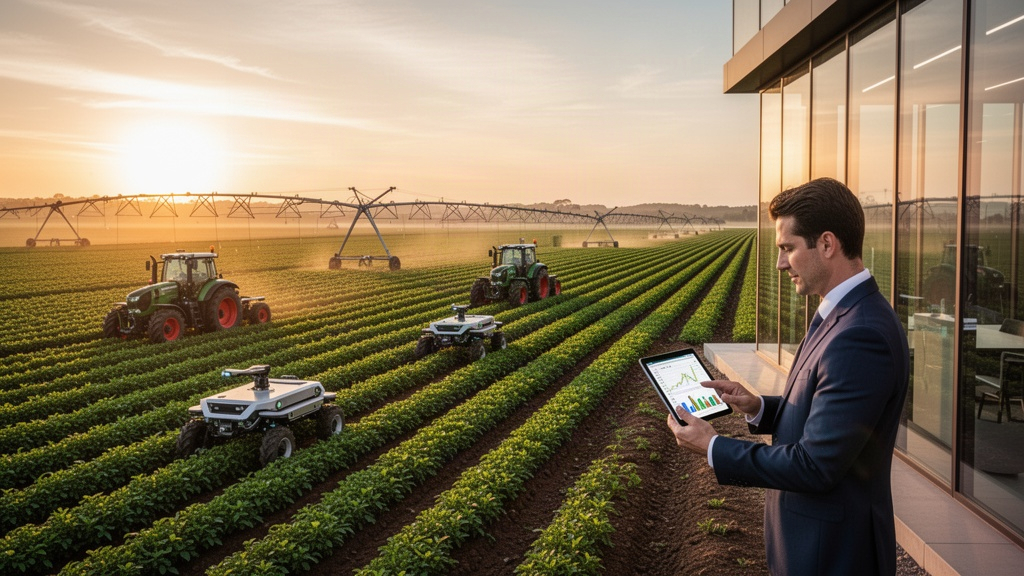
Technology adoption accelerates scaling. Precision agriculture tools — GPS-guided equipment, soil sensors, drone monitoring, and farm management software — reduce waste, improve decision-making, and generate data that lenders and buyers increasingly want to see. Farms that produce documented performance records can negotiate better financing terms and stronger supply contracts.
Partnerships with processors, cooperatives, and marketing platforms extend your reach without requiring proportional capital investment. A cooperative structure, for example, gives individual producers collective bargaining power on both input purchasing and product sales that no single operation could achieve alone.
Before committing to a growth phase, verify that your business meets these core viability criteria:
- Positive net farm income over at least two consecutive production cycles
- Working capital sufficient to cover one full operating season without external borrowing
- Documented compliance with all applicable federal, state, and local regulations
- At least one confirmed off-take agreement or reliable market channel for primary products
- Written risk management plan covering price, production, and weather exposure
- Clear succession or exit strategy for assets and operational responsibilities
- Financial records maintained to a standard acceptable to agricultural lenders
Scaling without this foundation tends to amplify existing weaknesses rather than build on strengths. The agricultural businesses that grow sustainably are those that treat financial discipline, regulatory compliance, and market relationships as non-negotiable operating standards from day one, not as problems to solve after the first expansion phase.