Urban farming is reshaping how cities think about food, space and commercial opportunity. As urbanisation accelerates — the UN projects that 68% of the world's population will live in cities by 2050 — the pressure to shorten supply chains and reduce dependence on distant agriculture has never been greater. Businesses are responding. From rooftop greenhouses in London to hydroponic warehouses in Chicago, entrepreneurs and investors are building operations that supply restaurants, retailers and households with produce grown metres rather than miles away. The sector spans radically different models, each with its own economics, risk profile and customer base. Understanding which approach fits which market is where the real competitive edge lies.
Why urban farming is attracting serious business attention
The commercial logic behind urban food production starts with geography. When a farm sits inside or adjacent to its end market, transport costs drop, shelf life extends and the producer can command a freshness premium that conventional supply chains cannot match. For perishable products — leafy greens, fresh herbs, microgreens — the advantage is measurable at the point of sale.
Consumer behaviour has reinforced this dynamic. Demand for locally sourced food has grown steadily across the US and UK, with supermarkets, independent retailers and food-service operators actively seeking regional supply partnerships. That demand creates a pull that investors and operators have noticed.
Supply-chain disruptions over recent years exposed the fragility of long, globalised food networks. Retailers and institutional buyers — hospitals, universities, corporate canteens — began diversifying their sourcing deliberately. Urban producers with reliable year-round output became attractive partners rather than niche curiosities.
The environmental dimension adds a further layer. Agriculture, forestry and land use account for approximately 22% of global greenhouse gas emissions according to the IPCC's 2019 assessment. Urban production does not eliminate that figure, but well-designed operations can reduce food miles, cut packaging waste and recover heat or water within a closed system. For businesses targeting sustainability-conscious buyers, that story has real commercial weight.
Policy frameworks are also shifting. The USDA's Office of Urban Agriculture and Innovative Production administers grants and technical resources specifically for urban operators in the United States. In the UK, DEFRA has included urban food systems within its broader food strategy discussions. Public funding and institutional backing lower the barrier to entry for well-prepared applicants.
Read also: Navigating Market Turbulence with VIX Stock: A Guide
Commercial models and their revenue streams
The term urban farming covers genuinely different businesses. Grouping them together obscures the economic reality of each. The table below compares four established models across the variables that matter most to operators and investors.
| Model | Typical setting | Technology intensity | Main revenue sources | Principal cost drivers | Scalability | Operational risks | Best-fit customers |
|---|---|---|---|---|---|---|---|
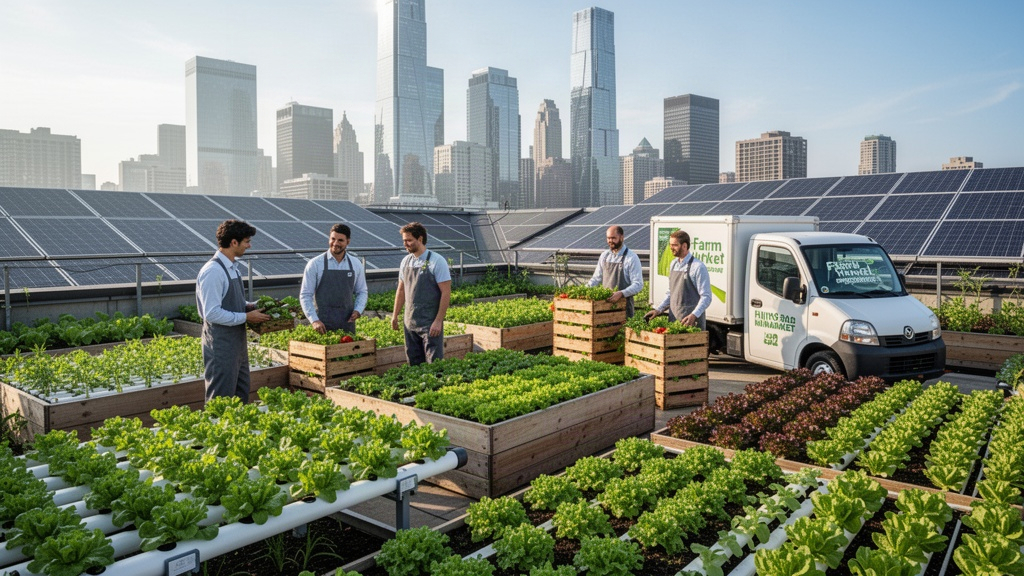
| Rooftop farming | Building rooftops, urban structures | Low to medium | Wholesale, direct sales, events | Structural works, waterproofing, access | Limited by roof load and area | Planning permission, weather exposure | Local restaurants, markets, CSA subscribers |
| Urban greenhouse | Dedicated buildings, industrial sites | Medium | Wholesale, retail, B2B contracts | Construction, heating, labour | Moderate — site-dependent | Energy costs, pest management | Supermarkets, food-service operators |
| Hydroponic / vertical farm | Warehouses, repurposed buildings | High | Premium retail, restaurant supply, licensing | Electricity, LED lighting, capital equipment | High within controlled environment | Energy price volatility, equipment failure | Premium grocers, high-end hospitality |
| Community-based model | Allotments, shared urban plots | Low | Memberships, grants, education, events | Land access, coordination, insurance | Low — community-scale by design | Volunteer dependency, funding cycles | Local residents, schools, councils |
Beyond direct produce sales, operators are building revenue by layering services onto their production base. Education programmes, farm tours, corporate wellness visits and cooking events generate income that is not exposed to commodity price fluctuations. Technology providers — selling sensors, software, growing systems and consulting — have built entire businesses serving operators rather than growing food themselves.
Where the strongest growth opportunities are emerging
Leafy greens and fresh herbs remain the most commercially proven crops for indoor and hydroponic systems. Their short growth cycles, high turnover and premium pricing relative to weight make the unit economics work at scale. Operators who have secured long-term supply agreements with grocery chains or food-service groups have demonstrated that consistent, year-round delivery commands contract stability that seasonal outdoor growers cannot offer.
Seedling and transplant production is a less visible but growing segment. Urban propagation facilities supply market gardens, allotments and community projects with young plants, capturing value early in the food production chain without the capital intensity of full-cycle growing.
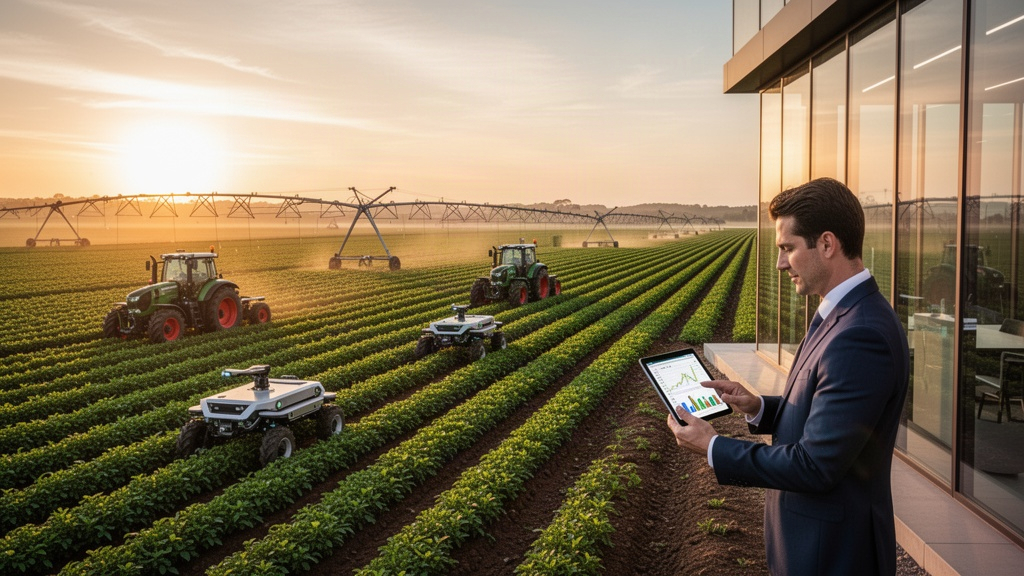
The infrastructure and data services layer is expanding fast. As more operators build controlled-environment agriculture (CEA) facilities, demand for precision irrigation systems, climate monitoring software, LED lighting solutions and crop-management platforms has grown in parallel. Businesses supplying these inputs often achieve better margins than the farms themselves.
Unused commercial space presents a distinct opportunity. Vacant retail units, underused car parks, redundant office basements and former industrial buildings are being converted into productive growing facilities. Landlords and property developers increasingly view urban farm tenants as a way to activate dead space while generating PR value and, in some cases, qualifying for sustainability-linked financing. That alignment of interests creates favourable lease conditions for operators who negotiate early.
Read also: Unlocking Business Success with Vxus: A Step-by-Step Guide
Farm-to-business contracts with hospitals, universities and corporate campuses represent a reliable revenue base that smaller operators often overlook. Institutional buyers value predictability over novelty. An operator who can deliver consistent volume, meet food-safety documentation requirements and invoice reliably will outcompete a more technically impressive competitor who cannot fulfil an order on time.
The economics: costs, energy and the path to profitability
No universal profitability benchmark exists for urban farming. Economics vary by crop, location, technology, energy prices and distribution model. That variability is not a reason for caution — it is a reason for rigorous unit economics analysis before committing capital.
Energy is the decisive variable for indoor and vertical operations. Controlled-environment agriculture can require materially more electricity than outdoor production, particularly when artificial lighting, heating, cooling and dehumidification run continuously. Operators who have secured renewable energy contracts or invested in on-site solar generation have meaningfully reduced their exposure to electricity price swings. Those who have not can find that a single energy price spike erases an entire quarter's margin.
Labour productivity deserves equal attention. Automated seeding, harvesting and packaging systems reduce per-unit labour costs at scale, but the capital expenditure required is substantial. Early-stage operators often underestimate how much skilled labour a precision growing facility demands before automation becomes viable.
Crop selection directly shapes financial outcomes. A high-value herb or specialty microgreen sold to premium restaurants generates very different returns per square metre than a commodity lettuce sold to a discount retailer. Pricing power depends on differentiation, reliability and the strength of the buyer relationship. Operators who diversify across two or four crop types reduce the risk of a single market shift wiping out revenue.
Read also: How to Invest in Stocks: A New Investor's Survival Kit
Buyer concentration is a structural risk that many operators discover too late. Dependence on a single supermarket contract or one large restaurant group leaves the business exposed to renegotiation or contract termination. Building a portfolio of buyers — mixing wholesale, direct-to-consumer and institutional channels — creates resilience that justifies the additional sales effort.
Building a viable strategy before scaling
The operators who have built durable urban farming businesses share a common discipline: they validated demand before they built capacity. A pilot production run, even at small scale, generates real data on yield consistency, customer acceptance, logistics cost and pricing tolerance. That data is worth more than any market research report.
Regulatory due diligence is non-negotiable. Depending on jurisdiction, an urban farm may need food-business registration, planning or zoning approval, water and wastewater authorisation, produce-safety compliance under frameworks like the FDA's Food Safety Modernization Act in the US, and workplace safety compliance under OSHA. Requirements differ between cities and between activities — growing, processing and selling prepared food each carry different obligations. Identifying those requirements early avoids costly retrofits.
Site assessment goes beyond square footage. Structural load capacity, access for deliveries, natural light availability, proximity to target customers and utility connection costs all affect whether a site is commercially viable. Rooftop farming projects have stalled because structural surveys were skipped at the feasibility stage.
Partnerships accelerate growth without proportional capital outlay. Agreements with property owners, food distributors, technology suppliers and anchor buyers can provide access to space, logistics infrastructure and guaranteed revenue that would take years to build independently. The strongest urban farming businesses tend to be embedded in networks rather than operating in isolation.
Scaling decisions should follow proven unit economics, not ambition. An operation that works profitably at one site, with documented yields, stable buyer relationships and understood cost structure, can be replicated with confidence. Scaling before those fundamentals are established is where most capital in this sector has been lost.