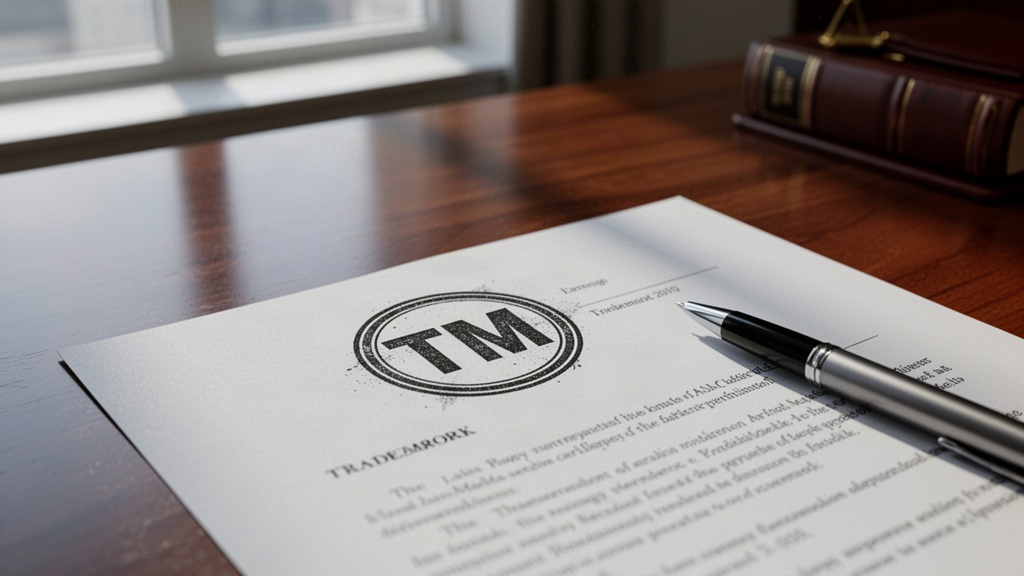
Every business owner faces a moment of decision: when to display a trademark TM logo next to a brand name, and what that choice actually means legally. The symbol looks simple — two small letters — but its implications stretch far beyond aesthetics. Using the TM symbol signals to competitors, customers, and courts that you are asserting ownership over a mark. Get it right, and you build a defensible brand asset. Get it wrong, and you expose your business to infringement claims, lost rights, or costly litigation. With over 1.3 million trademarks filed in the United States alone in recent years, understanding the legal mechanics behind this symbol has never been more pressing for entrepreneurs and established companies alike.
Understanding Trademark Law
Trademark law exists to protect both businesses and consumers. It gives brand owners the exclusive right to use a particular name, logo, or slogan in connection with specific goods or services, while preventing competitors from creating confusion in the marketplace. In the United States, the primary governing body is the United States Patent and Trademark Office (USPTO), which administers the federal registration system. Internationally, the World Intellectual Property Organization (WIPO) coordinates protection across member states through treaties like the Madrid Protocol.
A trademark can take many forms. Words, phrases, symbols, colors, sounds, and even scents can qualify, provided they distinguish one source of goods or services from another. The Lanham Act, enacted in 1946 and still the backbone of U.S. trademark law, establishes the standards for registration, enforcement, and remedies for infringement.
Rights in a trademark arise in two ways: through actual use in commerce, or through federal registration. Common law rights attach automatically when a business starts using a mark in a geographic area, even without registration. Federal registration, by contrast, provides nationwide priority, a legal presumption of ownership, and access to federal courts. The European Union Intellectual Property Office (EUIPO) operates on a first-to-file basis, meaning use alone does not create rights — registration does. These differences matter enormously for any business operating across borders.
Trademark law also draws a sharp line between protectable and unprotectable marks. Descriptive terms, generic words, and deceptive marks cannot be registered. Marks that are distinctive or fanciful — think invented words or arbitrary combinations — receive the strongest protection. Understanding where your mark falls on this spectrum determines how aggressively you can enforce it.
What the TM Logo Actually Does
The TM symbol is not a legal registration. It is a notice — a public declaration that the user claims trademark rights in a word, phrase, or logo. Any business can place TM next to its mark without filing a single document with the USPTO or any other authority. No permission is required. No fee is involved.
This matters because it allows businesses to assert brand ownership from day one, before a registration application clears the sometimes lengthy examination process. USPTO examination can take twelve to eighteen months under normal circumstances, leaving a gap during which a company is actively building its brand without the protection of the registered ® symbol. During that window, TM performs a real function: it puts third parties on notice that you regard the mark as your own.
The ® symbol, by contrast, is legally restricted. Using ® on an unregistered mark is a federal violation under U.S. law and can constitute fraud on the USPTO if done intentionally during a registration proceeding. The distinction between TM and ® is therefore not cosmetic — it carries legal consequences.
Outside the United States, rules vary. In many civil law jurisdictions, including most of continental Europe, trademark rights derive from registration rather than use, which means TM carries less legal weight. A business expanding internationally must understand that the trademark TM logo functions differently depending on the jurisdiction, and local counsel is often worth engaging before entering new markets.
Legal Risks of Displaying an Unregistered Mark
Using TM without conducting a prior clearance search is where many businesses stumble. If your mark is confusingly similar to one already in use, displaying TM does not protect you — it may actually accelerate a cease-and-desist letter. Trademark infringement occurs when a mark creates a likelihood of confusion among consumers, regardless of whether the infringing party registered anything.
Common law rights complicate this further. A competitor who has been using a similar mark in a regional market for years may have enforceable rights even without federal registration. Discovering this after investing heavily in brand development is a painful and expensive outcome. Clearance searches through the USPTO's TESS database, state trademark registries, and common law sources are not optional steps — they are the first line of defense.
Around half of registered trademarks face some form of challenge within the first five years after registration, according to industry estimates. For unregistered marks relying solely on TM, the exposure is even greater because the owner cannot access federal court jurisdiction as easily and cannot claim statutory damages. Damages in trademark litigation can include lost profits, corrective advertising costs, and in cases of willful infringement, attorney fees.
There is also the risk of abandonment. A trademark owner who stops using a mark for three or more consecutive years in the U.S. may lose rights to it entirely. Consistent, documented use matters as much as the symbol itself. Businesses that display TM casually, without maintaining records of commercial use, may find their rights difficult to enforce when it counts.
How to Protect Your Trademark
Protection starts before the mark goes public. A structured approach reduces the risk of costly disputes and builds a stronger legal position from the outset. The filing fee at the USPTO starts at $275 per class of goods or services, making federal registration one of the more affordable legal investments a business can make relative to its long-term value.
The steps worth taking, in order, are:
- Conduct a comprehensive clearance search covering federal and state registrations, common law uses, and domain names before adopting any new mark.
- File an application with the USPTO (or EUIPO, WIPO, or the relevant national office) as early as possible — intent-to-use applications allow filing before commercial use begins.
- Use the TM symbol consistently from the moment you start using the mark commercially, including on packaging, websites, and marketing materials.
- Switch to ® immediately upon receiving the registration certificate — not before.
- Monitor the trademark register and the marketplace for potentially conflicting marks, and respond to conflicts promptly through opposition proceedings or cease-and-desist letters.
Registration is not a one-time event. In the U.S., trademark owners must file maintenance documents between the fifth and sixth year after registration, and again every ten years. Missing these deadlines cancels the registration. Docketing systems or trademark management software can automate these reminders, removing human error from the equation.
Working with a trademark attorney is particularly valuable at the clearance and prosecution stages. Attorneys who specialize in intellectual property understand how examiners interpret similarity, how to draft broad yet defensible descriptions of goods and services, and how to respond to office actions that could otherwise derail an application.
Shifts in How Businesses Approach Brand Registration
The volume of trademark filings has grown steadily over the past decade, driven partly by the rise of e-commerce and the realization that brand identity is a transferable asset. Businesses that once operated locally now face global competition online, making registration in multiple jurisdictions a practical necessity rather than a luxury.
Non-fungible tokens, virtual goods, and metaverse commerce have opened new classification questions at trademark offices worldwide. The USPTO and EUIPO have both issued guidance on how digital goods and services fit within existing classification systems, and major brands have rushed to file in these new categories. A trademark registered only for physical goods may not automatically cover digital equivalents, a gap that competitors can exploit.
Another visible shift involves bad-faith filings, particularly from overseas applicants who register well-known foreign brands domestically before the legitimate owner enters the market. WIPO's dispute resolution mechanisms and national opposition systems provide remedies, but enforcement takes time and money. Proactive filing in key markets remains the most reliable defense against this practice.
The trademark TM logo may look like a minor typographic detail, but the legal framework surrounding it is anything but minor. Businesses that treat brand protection as a strategic priority — rather than an afterthought — consistently fare better in disputes, attract stronger licensing partners, and build assets that hold real value on a balance sheet.