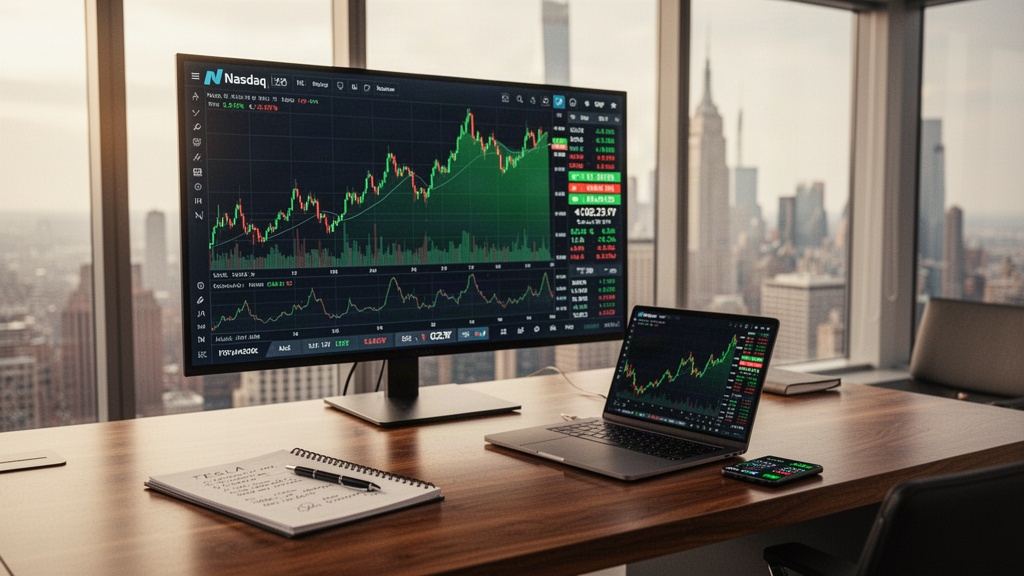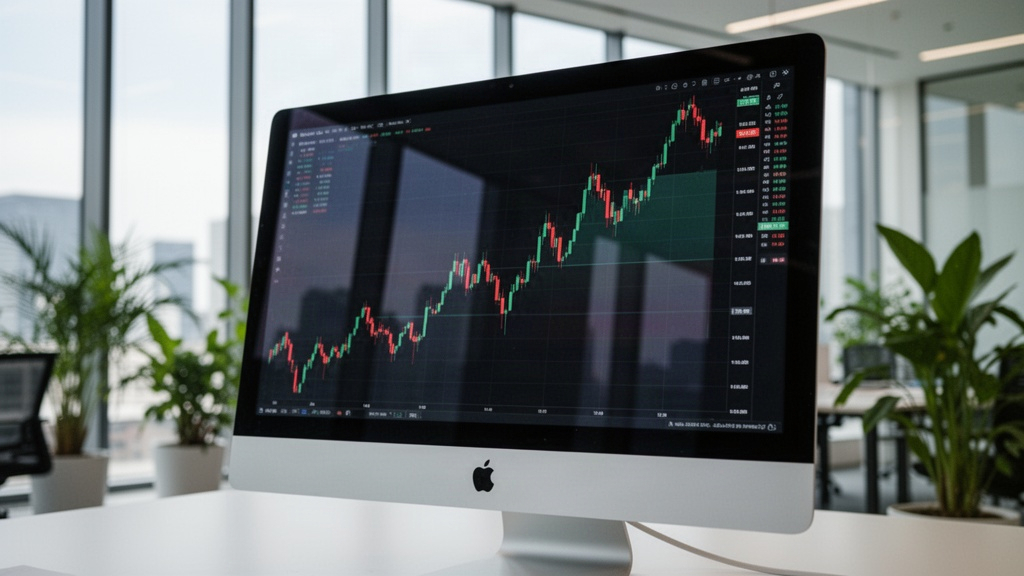
If you've been watching the stock price Apple computer listings without pulling the trigger, you may already be behind. Apple Inc. trades on the NASDAQ under the ticker symbol AAPL, and its share price has consistently rewarded long-term holders while frustrating those waiting for a "perfect" entry point. As of early 2026, Apple's stock reached $175 per share, backed by a market capitalization of approximately $2.8 trillion. That figure alone tells you this is not a speculative bet — it's one of the most scrutinized equities in the world. Yet many retail investors still hesitate, unsure whether the price reflects fair value or an overextension. The answer depends entirely on your investment horizon, your understanding of Apple's business model, and your ability to read the signals the market is already sending.
What the Stock Price of Apple Computer Reveals About Market Sentiment
Stock prices don't move in a vacuum. When Apple's share price climbs or contracts, it reflects a combination of earnings expectations, macroeconomic conditions, and investor psychology. At $175 in January 2026, AAPL was trading at a premium compared to many of its technology sector peers, which signals that the market assigns high confidence to Apple's future cash flows. That premium is not accidental.
Apple's price-to-earnings ratio has historically hovered above the S&P 500 average, and investors have consistently accepted that premium because of the company's ability to generate recurring revenue. The Services segment — which includes the App Store, Apple Music, iCloud, and Apple TV+ — now generates tens of billions of dollars annually, providing a revenue stream that hardware cycles alone cannot explain.
Short-term volatility does occur. Announcements from the Federal Reserve on interest rates, shifts in consumer spending data, and supply chain disruptions in Asia have all triggered intraday swings in AAPL. But the pattern over the past decade shows a stock that recovers quickly and trends upward on a longer timeline. Investors who sold during dips in 2022 and 2023 largely missed the subsequent recovery that pushed prices back to record territory.
Reading market sentiment around AAPL requires more than watching the ticker. Monitoring institutional ownership changes, options activity, and analyst price target revisions gives a far clearer picture of where professional money is flowing. The Securities and Exchange Commission (SEC) requires institutional investors managing over $100 million to disclose their holdings quarterly, and Apple consistently appears in the top holdings of the world's largest funds.
Read also: Palantir Stocks: How They Compare to Tech Giants
Internal and External Forces Shaping Apple's Valuation
Several forces push and pull on Apple's valuation at any given moment. On the internal side, product cycles matter enormously. An iPhone launch year typically generates a surge in hardware revenue, which flows directly into earnings per share. When those numbers beat analyst expectations — as they did repeatedly in recent years — the stock tends to gap upward in after-hours trading.
Apple's aggressive share buyback program is another internal driver that many retail investors underestimate. The company has spent hundreds of billions of dollars repurchasing its own shares over the past decade. Buybacks reduce the total share count, which mechanically increases earnings per share even when net income stays flat. This practice has been a quiet but powerful engine behind AAPL's long-term price appreciation.
Externally, interest rate policy from the Federal Reserve affects growth stocks including Apple. When rates rise, the present value of future earnings falls in discounted cash flow models, which can depress share prices even when the underlying business performs well. That dynamic played out visibly in 2022. Conversely, rate cuts or pauses tend to lift technology valuations across the board.
Geopolitical factors also apply direct pressure. Apple manufactures a significant portion of its products in China, and any escalation in US-China trade tensions creates uncertainty about margins and supply reliability. Investors have learned to watch diplomatic signals as closely as product announcements when assessing near-term risk in AAPL positions.
Investment Opportunities Worth Considering with AAPL
Identifying the right approach to investing in Apple shares depends on your financial situation, risk tolerance, and timeline. There is no universal strategy, but several approaches have proven effective for different investor profiles.
Read also: What experts predict for Microsoft stock in the coming years
- Dollar-cost averaging (DCA): Buying a fixed dollar amount of AAPL at regular intervals removes the pressure of timing the market and smooths out the impact of volatility over months and years.
- Dividend reinvestment: Apple pays a quarterly dividend. Reinvesting those dividends automatically compounds your position without requiring additional capital outlay.
- Options strategies: Experienced investors use covered calls on existing AAPL positions to generate income, or cash-secured puts to potentially acquire shares at a lower target price.
- ETF exposure: Investors uncomfortable with single-stock risk can gain Apple exposure through broad-market or technology-focused ETFs, where AAPL often represents the largest individual holding.
Before committing capital, verify your brokerage's fee structure and confirm that the account type — taxable, IRA, or Roth IRA — aligns with your tax situation. Platforms like Yahoo Finance provide real-time price data, earnings calendars, and analyst consensus ratings that support informed decision-making without requiring a Bloomberg terminal.
One angle that retail investors frequently overlook: Apple's stock split history. AAPL has split multiple times, most recently in 2020 at a 4-for-1 ratio. Splits don't change the underlying value, but they do lower the per-share price, which historically brings in a new wave of smaller buyers and can create short-term upward pressure.
What Analysts Are Projecting for Apple's Share Performance
Analyst price targets for AAPL vary, but the consensus among major Wall Street firms as of early 2026 leans bullish. Several firms have set 12-month targets above $200, citing Apple's expanding services revenue, its push into spatial computing with the Vision Pro headset, and its growing presence in financial services through Apple Pay and Apple Card partnerships.
The bear case centers on market saturation in smartphones. Global smartphone unit growth has slowed, and Apple's ability to grow iPhone revenue now depends more on average selling price increases than on unit volume. If consumers hold onto devices longer — a trend that accelerated post-pandemic — hardware revenue growth faces a natural ceiling.
Apple's investments in artificial intelligence integration across its operating systems represent a potential re-rating catalyst. If AI features drive upgrade cycles among the existing installed base of over one billion active devices, the revenue impact could be substantial. That's not a guarantee, but it's a scenario that analysts are actively pricing into their models.
Read also: Unlocking Business Success with Vxus: A Step-by-Step Guide
The NASDAQ Composite index, where Apple is listed, tends to amplify both gains and losses in technology stocks relative to broader indices. In a risk-on environment, AAPL benefits from index-level buying. In risk-off periods, it faces selling pressure alongside the rest of the sector, regardless of company-specific fundamentals.
Timing, Patience, and the Real Cost of Waiting
The most overlooked cost in equity investing is opportunity cost — the return you forgo by staying in cash or low-yield instruments while a stock appreciates. Investors who waited for Apple to "pull back" to $100 in 2023 watched the stock move past $175 without them. That gap represents real, unrealized wealth.
Patience matters, but patience and inaction are not the same thing. Building a position gradually over several months allows an investor to participate in upside while managing entry risk. Waiting indefinitely for a perfect price is a strategy that has historically underperformed systematic buying in AAPL.
Apple's $2.8 trillion market capitalization means it is not going to double overnight. The realistic expectation for a company of this size is steady, compounding growth with occasional sharp moves tied to earnings surprises or macro shifts. That profile suits long-term investors more than traders chasing momentum.
Financial data changes rapidly, and any position in Apple stock should be reviewed against current earnings reports, updated analyst targets, and your own evolving financial goals. The SEC's EDGAR database and NASDAQ's investor relations pages provide the primary source documents — earnings releases, 10-K filings, and proxy statements — that underpin any serious analysis of AAPL's trajectory.